
Aleksandar Ašković: “More Content Won’t Win – Better Content Will”
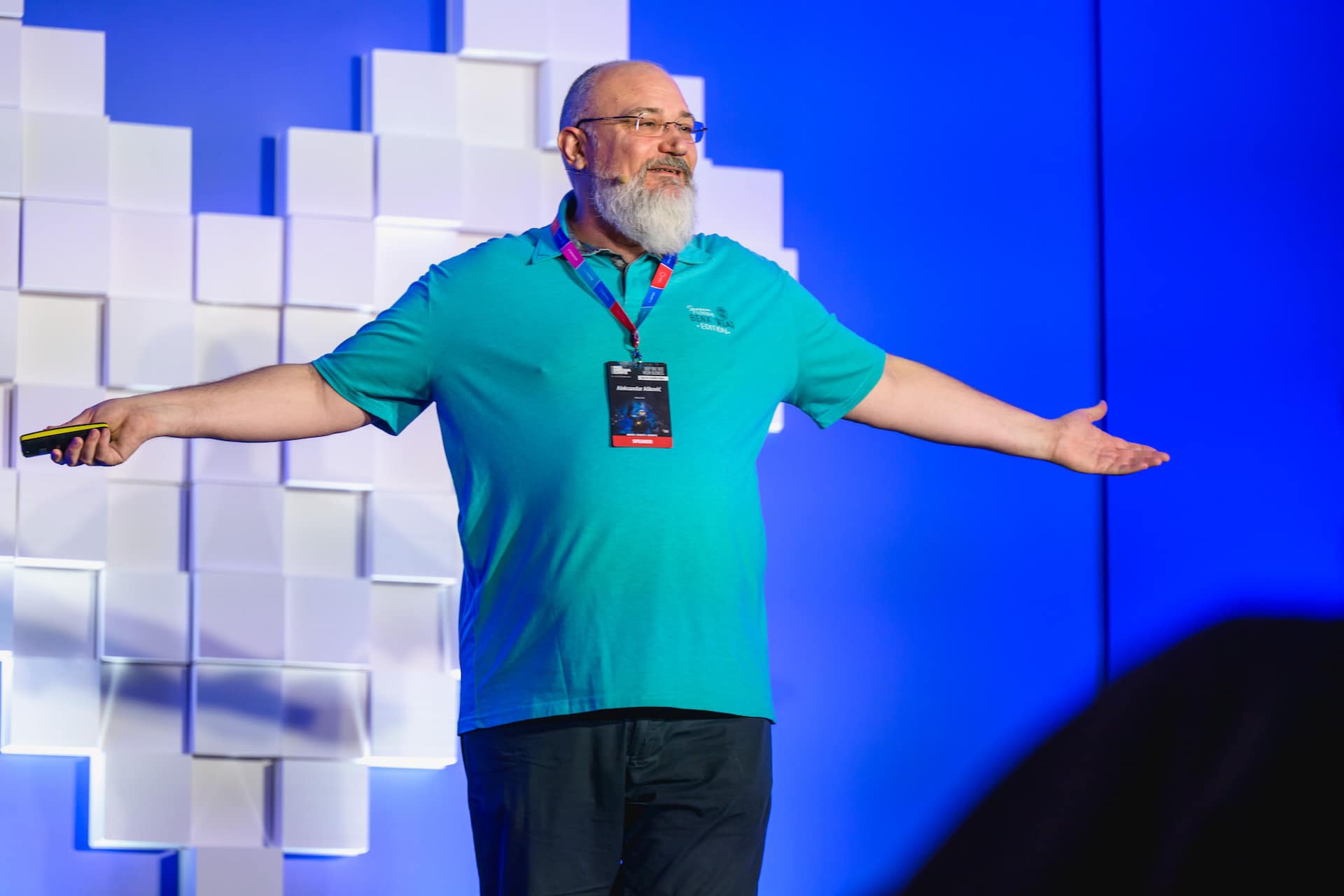
From traditional media and gaming to YouTube strategy and SEO, Aleksandar “Kojot” Ašković has been part of the evolution of digital media for nearly three decades. Starting his career in 1997 with Svet kompjutera magazine, he later created the TV shows Game-Over and KursorTV, before launching the KursorTV YouTube channel in 2009 and making the move into online video.
Today, as a YouTube Strategy & SEO Expert, Aleksandar helps brands and creators build video strategies based not only on great content, but also on data, audience behavior, and a deep understanding of how the YouTube ecosystem works. Over the years, he has worked with names including EuroLeague Basketball, LG, UNDP Serbia, Sport Klub, Valvoline EMEA, and others.
This November, Aleksandar will join us as a speaker at the E-commerce Conference 2026 in Skopje, bringing his experience and perspective on how brands can navigate the rapidly changing world of video, YouTube, and AI.
Ahead of his session, we spoke with Aleksandar about YouTube’s transformation from a video platform into a serious competitor to traditional television, the mistakes brands make when creating content, and why understanding your audience matters more than satisfying internal approval processes.
We also discuss how AI will dramatically increase the amount of content and advertising online, why constant testing will become essential, and — perhaps paradoxically — why human creativity will become even more valuable in an AI-powered world.
And when it comes to succeeding on YouTube, Aleksandar’s message is clear: creating great content is only half the job. The other half is making sure the platform understands who should see it — and giving people a reason to click and keep watching.
1. What is the most important trend or shift in your industry that businesses should be paying attention to right now?
YouTube is no longer just a rival to traditional television — in many ways, it is becoming television. More and more people are watching YouTube on their TV screens, not just on their phones or computers, and this is fundamentally changing how audiences consume video content.
For businesses, this means YouTube should no longer be treated as just another social media platform. It is becoming one of the main sources of entertainment, education, and information in the living room. Brands need to think about YouTube content the same way they once thought about television, while also taking advantage of what digital platforms offer: search, recommendations, analytics, personalization, and direct interaction with the audience.
2. Looking at today’s business landscape, what is one common mistake you see companies making, and how can they avoid it?
One of the most common mistakes I see, especially in brand marketing, is that companies create content to satisfy their internal management structure instead of their audience.
There are often too many people involved in approving campaigns, each with their own priorities, opinions, and KPIs. By the time a piece of content reaches the audience, it may satisfy everyone inside the company but fail to connect with the people it was actually created for.
Companies need to become much more audience-centric. Data can help answer that question, but companies also need to trust the people who understand the platform and the audience.
3. What excites you most about the future of e-commerce, marketing, and tech?
The rise of AI will fundamentally change the way we do business. Teams will become smaller, while at the same time they will be capable of producing and managing much more work. Almost every company will try to automate as much of its workflow as possible, from research and content production to advertising, analytics, and customer communication.
This will also dramatically lower the barrier to creating and publishing advertising. As a result, consumers will probably be exposed to even more content and even more ads.
That is why I believe two things will become increasingly important. The first is testing. A/B testing and constant experimentation will become essential because companies will be able to create and test far more variations than ever before.
But paradoxically, I think creativity will become even more valuable. When everybody has access to similar AI tools and can produce hundreds of ads, simply producing more content will no longer be a competitive advantage. Understanding your audience and creating something genuinely interesting, useful, surprising, or entertaining will be what separates successful brands from everyone else.
4. What insights, ideas, or perspectives will you bring to the audience at the E-commerce Conference 2026, and what is the one thing you hope that participants will remember?
Video has become one of the dominant ways people entertain themselves, learn, research products, and make purchasing decisions online. For many consumers, especially younger audiences, YouTube is not just a video platform anymore. It is a search engine, a recommendation engine, an entertainment platform, and increasingly something they watch on the biggest screen in their home — the TV.
For e-commerce brands, this creates a huge opportunity, but also a challenge.
Creating good video content is only the first step. You can produce an excellent video, but if the platform does not understand what the content is about, who it is for, and why people should click on it, that video may never reach the audience it was created for.
This is where many companies make a mistake. They focus heavily on production quality, but not enough on distribution, packaging, and platform strategy.
On YouTube, the title, thumbnail, topic selection, keywords, description, viewer behavior, retention, and the relationship between different videos all help the platform understand who should see your content. At the same time, brands need to understand what their audience is actually searching for and what kind of content people want to watch before, during, and after a purchasing decision.
For an e-commerce company, this could mean answering product questions, comparing products, solving customer problems, explaining features, creating useful guides, or producing entertaining content around the category rather than simply creating traditional advertisements.
My perspective is that companies need to stop thinking about YouTube as a place where they simply upload their existing videos. They need to start treating it as its own ecosystem, with its own audience behavior, algorithms, formats, and rules.
And this is becoming even more important with AI. As creating video, ads, copy, and marketing materials becomes easier, the amount of content online will increase dramatically.
If there is one thing I want participants to remember, it is this:
Creating great content is only half of the job. The other half is making sure the platform understands who should see it — and giving people a reason to click and keep watching.