
Miroslav Varga: The Future of Search Belongs to AI, Not Keywords
Artificial intelligence is rapidly changing the way people search, discover products, and make purchasing decisions. As AI-powered search becomes more conversational, businesses will need to rethink not only their SEO and advertising strategies, but also the way they structure information online.
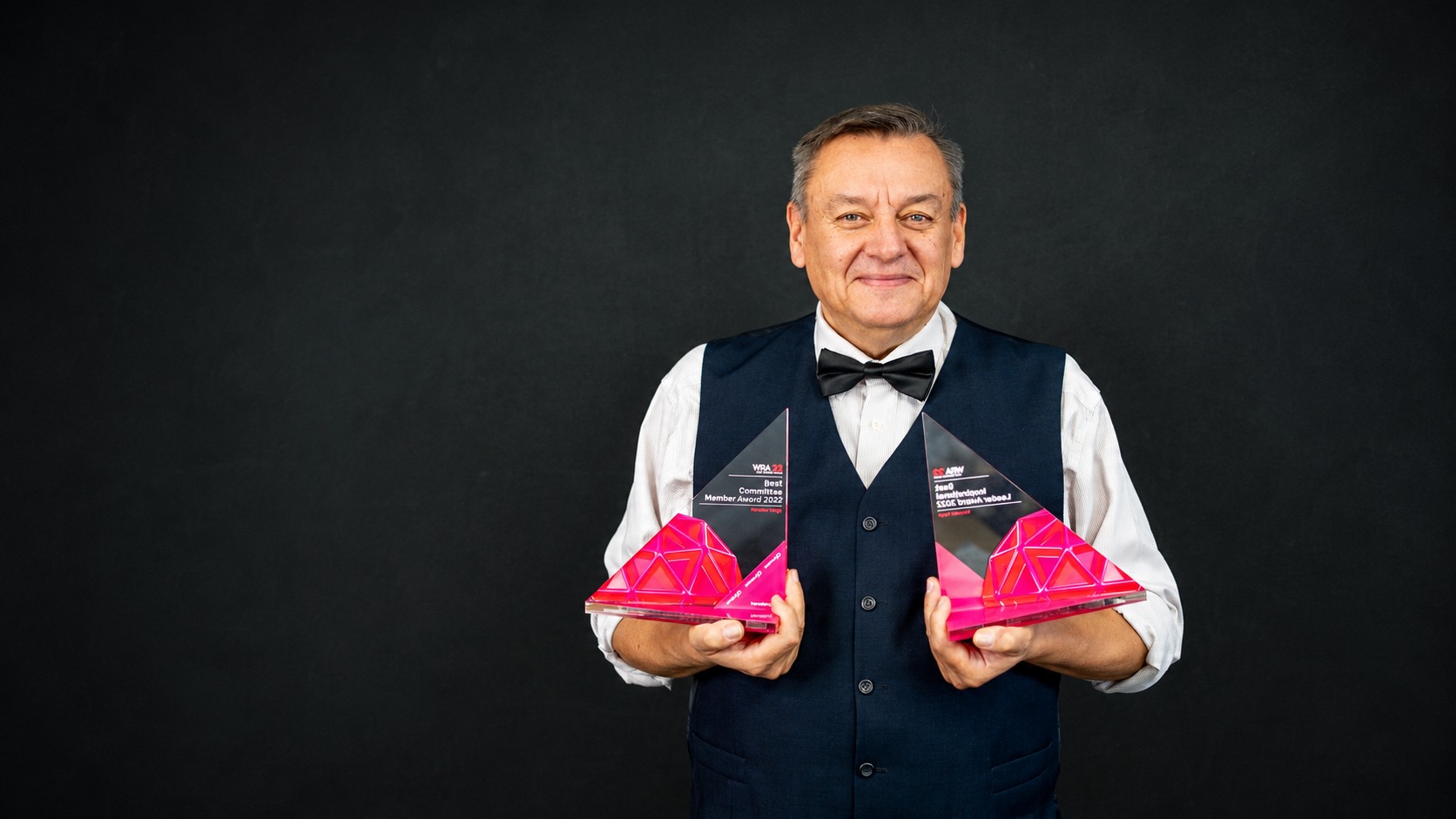
Ahead of the 9th Regional E-commerce Conference, we spoke with Miroslav Varga, one of this year’s keynote speakers, about why the era of keyword-focused marketing is coming to an end, what companies are still getting wrong about customer behavior, and how AI is creating one of the biggest opportunities the industry has ever seen.
This November in Skopje, Miroslav will share practical insights, real-world case studies, and actionable strategies to help businesses adapt to the next generation of search, advertising, and e-commerce.
What is the most important trend or shift in your industry that businesses should be paying attention to right now?
Today’s users increasingly rely on AI systems when searching for products or services. This is slowly but surely leading to the ‘death’ of keyword-based search. I believe that within two years at most, successful ad campaigns will base their results on search phrases rather than isolated keywords.
To succeed in the coming period, it is crucial to start preparing today, as the volume of phrase-based searches is already skyrocketing. For context, inside Google Search—which accounts for about 91% of all global searches—AI-generated overviews now appear in roughly 48% of queries. Furthermore, about 37% of users today are more likely to start their search journey directly within an AI platform rather than Google, with direct AI searches rising at an enormous rate of 500% year-over-year.
Therefore, it is essential to adapt both advertising campaigns and a website’s information structure to this new conversational reality. The current best practice is to structure web content in a strict Q&A format: Heading = Question, First Paragraph = Answer.
Keywords will only survive in highly specific searches (e.g., a precise product name or a catalog number). Consequently, it is vital to ‘feed’ advertising systems with a structured product feed—tabular data uploaded directly into the platform—making it much easier for AI models to locate the requested product.
Looking at today’s business landscape, what is one common mistake you see companies making, and how can they avoid it?
From my point of view, the biggest mistake in marketing is a fundamental misunderstanding of user behavior. Decision-makers frequently suffer from the “Gate Effect“—the moment they walk through the office gate, they completely forget how they behave as regular consumers online.
Users and customers do not think or behave within brand or product category silos; they navigate the internet fluidly. Despite this omnichannel reality, large companies rigidly separate campaigns by brand or product silos, fighting over internal budgets while forgetting that all revenue ultimately flows into the exact same cash register. To make matters worse, they insist on optimizing budgets based on completely meaningless, siloed metrics—such as brand- or product-specific tROAS, tCPA, CoS, or CPC. They even try to optimize the multi-channel funnel itself, all while lacking the necessary data to do so (it’s very hard to measure the baba Zorka komšinica contribution). I consider this approach a total failure. A far better alternative is to observe macro trends and focus heavily on understanding the actual user.
Conversely, small businesses still hesitate to invest in digital ads, keeping themselves strictly confined to Google and Meta while completely ignoring video. Today, AI eliminates high video production costs entirely. The ultimate low-budget strategy is simple: create short-form video content and blast it across four channels simultaneously—YouTube Shorts, Facebook Reels, Instagram Reels, and TikTok.
What excites you most about the future of e-commerce, marketing, and tech?
Having spent many years in this industry, I vividly remember how difficult it used to be to convince clients that consumers were no longer watching TV or reading newspapers when looking for a product or service—they were searching the internet.
Then came the era when it was equally tough to explain that someone researching on a mobile phone during the day would eventually make the purchase on a desktop. Being present on mobile screens became crucial. Next came short-form videos, which essentially replaced traditional TV commercials.
Today, the rise of AI platforms represents a revolution of that same, if not greater, magnitude. This does not mean we should abandon TV or other traditional advertising channels; it means we must adapt to the times. I remember a client who was advised to spark curiosity through very affordable radio ads. We immediately noticed a massive spike on Google for the specific search terms used in those radio spots.
I believe an incredibly exciting era lies ahead for our industry, opening up completely new possibilities. True creativity will now have a massive playground for growth. At the same time, technical experts will remain as essential as ever, because these new methods will demand entirely new skill sets.
What insights, ideas, or perspectives will you bring to the audience at the E-commerce Conference 2026, and what is the one thing you hope that participants will remember?
I will share some of my own experiences and the shifts that have taken place over the years. I love talking about my personal insights—and yes, even my mistakes—because I believe it is vital for everyone in our industry to share what they observe. When we share, we actually multiply.
I will present real-world case studies and offer practical advice on the pitfalls to watch out for and how to avoid them. However, the most important takeaway I hope everyone leaves my presentation with is this: never forget that our ultimate task is to adapt information for our customers if we want our businesses to succeed. Whether that customer is a human being or my smart fridge’s AI.
Looking ahead to the next 2-3 years, how do you see e-commerce evolving – especially with the rise of AI, automation, and changing consumer behavior?
As highlighted earlier, the near future will be defined by the transition from keywords to search phrases and a massive paradigm shift in advertising. It is equally important to emphasize the critical need to break down internal corporate silos, as we are witnessing the opening of opportunities that no one has ever had access to before.
We are incredibly fortunate to live in an era of such monumental possibilities. While some may experience these rapid and intense changes as overwhelming, I believe that the sheer amount of space being created for innovation and growth is completely unprecedented in human history.