
Luka Antić: “AI Is Changing the Rules of E-commerce — Authenticity Is Your Biggest Advantage”
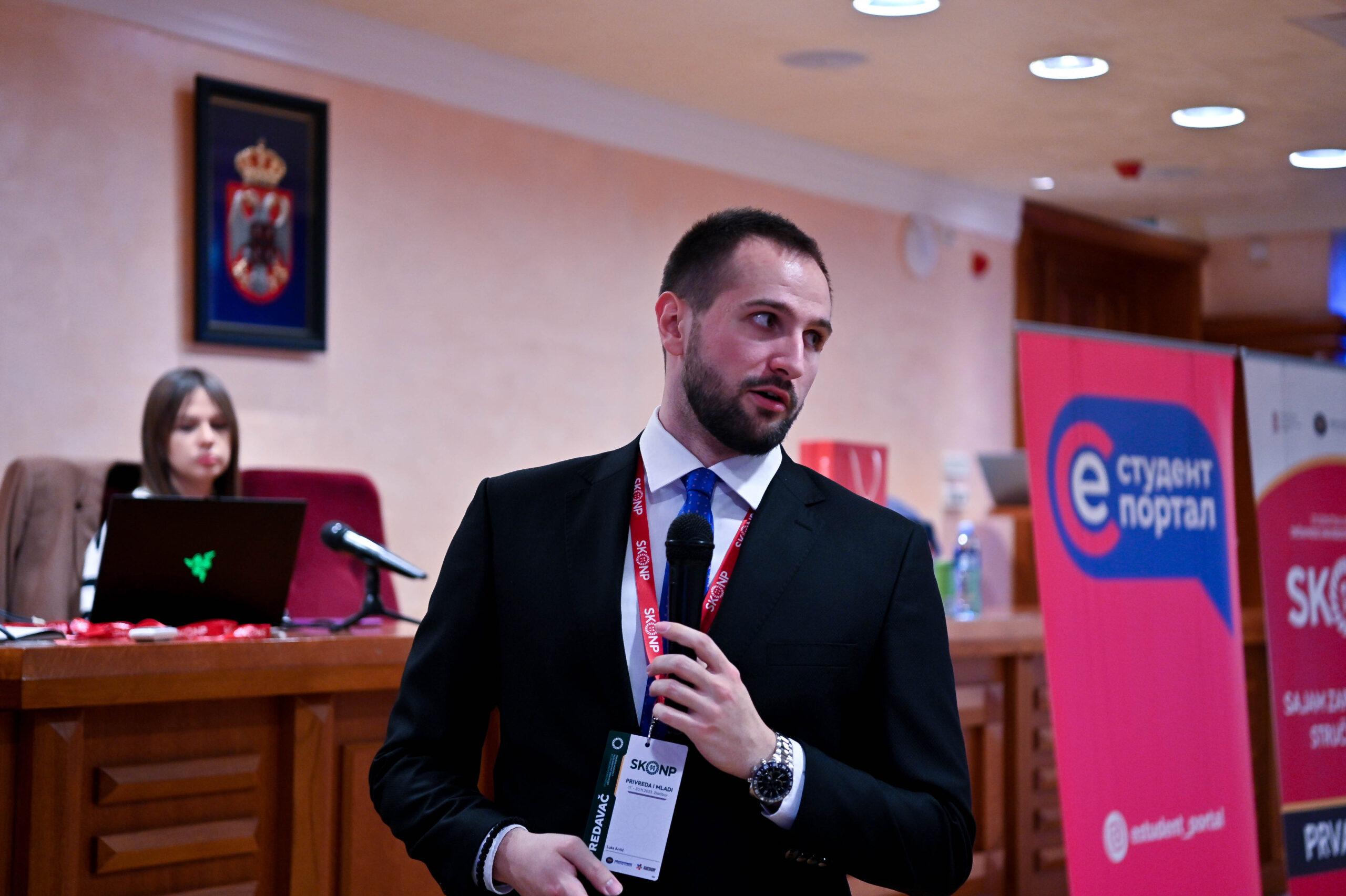
AI is making it easier than ever to launch a business, build a brand, and compete with established players. But as technology becomes accessible to everyone, what will truly set successful e-commerce businesses apart?
We caught up with Luka Antić, entrepreneur and Brand Ambassador of the 9th Regional E-commerce Conference from Serbia, to discuss how AI is reshaping entrepreneurship, why authenticity is becoming a brand’s most valuable asset, and where the biggest opportunities lie for businesses across the Balkans.
From AI-powered business models and smarter operations to the rise of micro-niches and locally inspired brands, Luka shares his perspective on why the future of e-commerce belongs to those who combine technology with originality.
And for anyone still wondering whether to attend this year’s conference, Luka has a challenge: ask your AI if you should come. If it says no, he’ll personally buy your ticket!
1. What is one e-commerce trend that you believe will significantly shape the industry over the next 12 months?
I believe one of the most impactful trends we’ll see over the next 12 months is the rise of entirely new e‑commerce businesses powered by AI. What’s already visible is that AI has dramatically lowered the barrier to entry — individuals can now launch professional‑looking brands with a level of speed and sophistication that was previously reserved for large systems.
This shift creates real pressure for long‑established players who spent decades trying to centralize online shopping. AI is decentralizing that power. It enables smaller teams to generate high‑quality photo and video content, structure their decision‑making, and receive clear strategic guidance on how to move toward their goals.
In many ways, AI acts like a “strategic assistant” — it doesn’t replace the work, but it gives people the resources, clarity, and direction they need to operate at a higher level. And that dynamic will reshape the competitive landscape more than any single technology trend we’ve seen recently.
2. What is one thing businesses should stop doing in e-commerce – and one thing they should start doing immediately?
One thing businesses should stop doing immediately is overspending on processes and services that no longer justify their cost. The market is shifting toward higher value for lower investment, and with AI tools now accessible at a click, inefficiency has become a choice rather than a constraint. Companies should reconsider expensive photographers, videographers, large development teams, and costly educational programs — especially if they are small or early‑stage. Today, AI can provide a level of guidance, content creation, and operational support that previously required multiple external partners.
At the same time, businesses should start embracing AI as a core operational capability, not an optional add‑on. Service providers must use AI to deliver more output at higher speed while maintaining quality, and smaller companies should rely on AI to validate their business concepts before investing heavily in external talent. Later, as revenue grows, they can bring in specialists who are themselves proficient with AI — because traditional roles that ignore AI will become too slow and too expensive to remain competitive.
In short: reduce unnecessary costs, increase operational efficiency, and adopt AI as a strategic partner from day one. That combination will define which businesses stay agile and which fall behind.
3. What is the biggest opportunity for e-commerce businesses in the Balkans right now?
The biggest opportunity for e‑commerce businesses in the Balkans right now lies in embracing the uniqueness of the region. The Balkans are defined by specific cultural patterns, habits, and expectations — and businesses that recognize this can build concepts that are far more relevant than simply copying global trends. Instead of looking at what works in the West and trying to force it here, companies should adopt proven operational systems from mature markets, but apply them to ideas that are authentically local. That combination creates a winning mix of global efficiency and regional identity.
The future belongs to businesses that offer clear, practical solutions to real local needs. The Balkan market is not positioned for expensive experimentation or for educating consumers about trends that don’t fit our lifestyle. It’s far more effective to pause, observe what truly surrounds us, and build products that solve problems people here actually have. As the saying goes: it’s better to be first in your village than last in the city.
Micro‑niches are the strongest opportunity. They allow brands to leverage local resources, local culture, and local authenticity — all of which make products easier to understand, easier to trust, and easier to sell without relying on global distribution chains.
4. How is AI changing the way you work, and what is one AI tool or use case you believe every e-commerce professional should know about?
AI arrived for me at exactly the right moment, and I’m genuinely excited to see how it continues to evolve. What we’re experiencing today are just the first seconds of a very long development cycle — both for AI itself and for our relationship with it. I spent my entire twenties building businesses, and now, entering my thirties, I can feel the weight of that pace. AI helps me reduce the strain, handle daily challenges more efficiently, and maintain a sustainable level of performance. Of course, none of this would be possible without the hard‑earned experience I bring from the business world; I simply combine that foundation with new technology and look for the workflows that fit me best in this new era.
Without intending to promote any specific product, Microsoft Copilot currently covers almost everything I need — both in my role and in my personal life. I’m sure that 90% of capabilities overlap across major AI models, and I’m happy to let them compete while we benefit from their progress at still surprisingly low prices. That’s exactly why professionals need to move faster than before: to capture the full value of what 2026 is offering.
5. If you could give one piece of advice to a business that wants to grow in e-commerce, what would it be?
My most important advice is to invest relentlessly in your authenticity. It’s the one asset no competitor can steal or replicate, because only you are you. The era of personal brand‑driven e‑commerce has already arrived, and businesses that build from their own identity will grow faster, stand out more clearly, and create value that feels real to customers.
6. What are you most looking forward to about the upcoming 9th Regional E-commerce Conference, and what would you say to people who are considering attending?
I’ve become something of a veteran at this conference, so I don’t come with specific expectations anymore. Over the years, I’ve learned that each new edition ends up being better than the last, so I arrive relaxed, open, and ready to absorb the stories, insights, and energy of the speakers and the people I meet in the hallways. Then I return to Belgrade with a fresh wave of inspiration that fuels both my personal growth and the growth of our business.
For anyone still deciding whether to attend — ask your AI what it thinks. I’ll personally buy a ticket (200EUR) to anyone whose AI tells them not to come.