
🇮🇹 Daniele Rutigliano: The Future of E-commerce Will Be Decided by AI and the Quality of Your Data
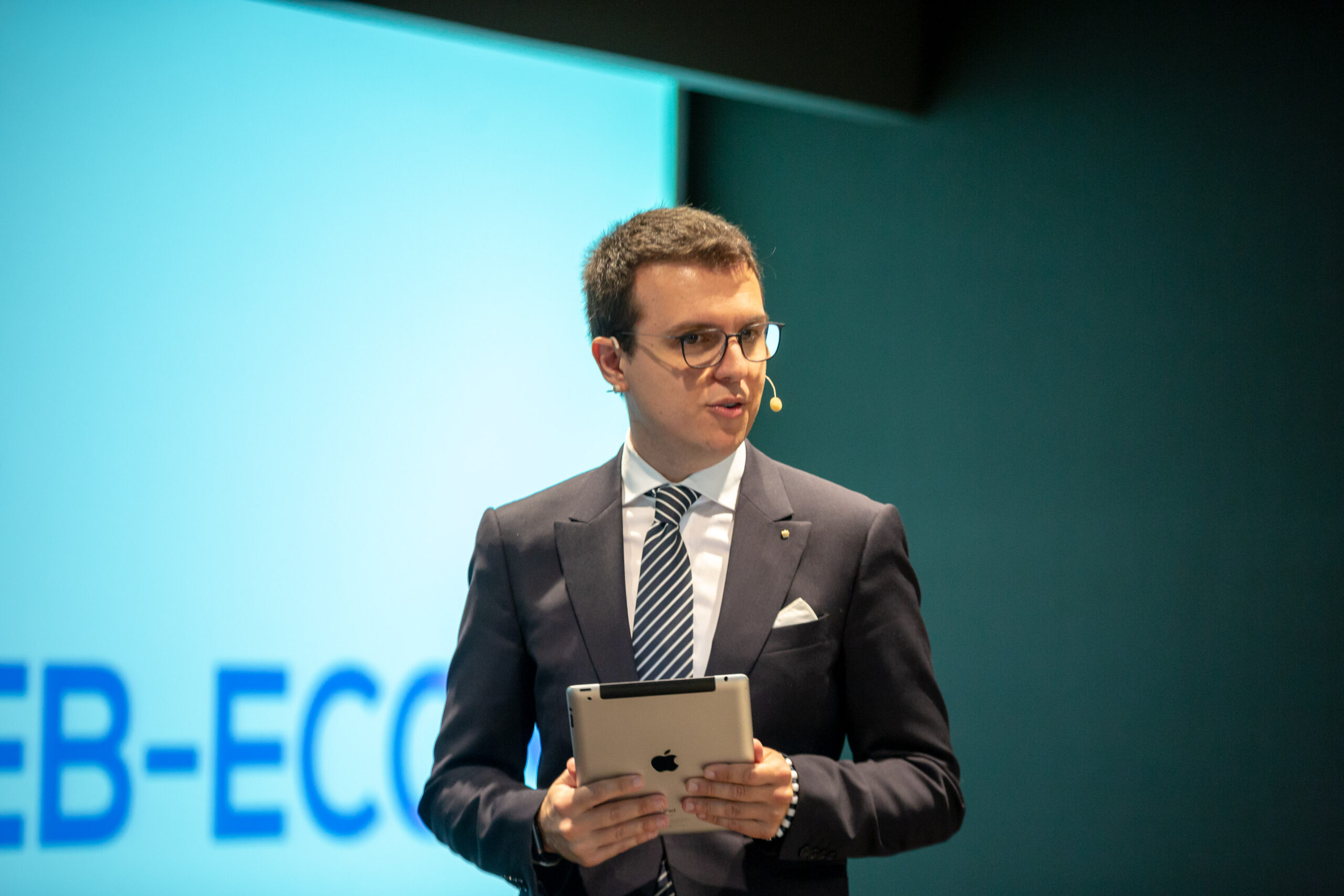
The future of e-commerce is being shaped by innovation, technology, and the people who are constantly pushing the industry forward. Among them is Daniele Rutigliano—Brand Ambassador for Italy for the 9th Regional E-commerce Conference, entrepreneur, and University Lecturer in E-commerce.
Drawing on more than 20 years of experience in digital commerce, Daniele shares his views on the rapid rise of artificial intelligence, the importance of building AI-ready online stores, the opportunities for businesses across the Balkans, and the emerging shift toward agentic commerce.
Whether you’re an online retailer, marketer, or e-commerce professional, this interview offers valuable insights into where the industry is heading—and why now is the time to prepare for what’s next.
Read the full interview below, and join us in Skopje this November at the 9th Regional E-commerce Conference.
1. What is one e-commerce trend that you believe will significantly shape the industry over the next 12 months?
There is no doubt that artificial intelligence is transforming ecommerce, as well as our everyday lives. However, many businesses still struggle to understand which tools they should use and which processes or tasks they should entrust to AI systems. New features, apps, and software solutions are launched every day, while ChatGPT itself, a first mover in generative AI, continues to evolve and improve rapidly.
I see many entrepreneurs searching for the best AI shopping assistant for their industry, perhaps because they have become accustomed to using ChatGPT, without realizing that the first step is to enrich their ecommerce product pages. If product pages are incomplete and lack detailed, accurate content, a virtual assistant will not have enough reliable information to work with, increasing the risk of inaccurate or fabricated answers.
2. What is one thing businesses should stop doing in e-commerce – and one thing they should start doing immediately?
In more than 20 years of experience, I have seen many businesses make the same mistake: focusing too heavily on changing their ecommerce platform. In some cases, replatforming is both necessary and appropriate, especially when replacing an outdated and insecure system. In many others, however, it is driven more by trends than by actual business needs: “Let’s move to Shopify because it is easy to use, offers plenty of features, and our competitors are using it”.
In my view, replatforming should only take place in response to a specific need and after a thorough technical assessment of the company’s requirements, essential features, modules, and existing integrations.
The actions businesses should take immediately are often related to marketing. Investing in SEO or running advertising campaigns on platforms such as Meta could increase sales and generate profits—provided, of course, that the existing ecommerce platform works properly.
3. What is the biggest opportunity for e-commerce businesses in the Balkans right now?
The ecommerce sector is gaining significant momentum across the Balkans. Governments, public institutions, and the European Union are well aware of this potential and are allocating funds to support innovation and startup development.
Albania, for example, ranks fourth in Europe for startup growth. Through Innovation4Albania’s Grant 2026 program, the Albanian government has allocated €6 million in funding, with the goal of increasing this amount to €20 million by 2030.
Albania also offers a standard corporate income tax rate of 15%, together with increasingly digitalized administrative procedures.
4. How is AI changing the way you work, and what is one AI tool or use case you believe every e-commerce professional should know about?
I use artificial intelligence every day, but only in controlled environments, without giving it full control over my projects or tasks. I mainly use ChatGPT to challenge and refine some of my ideas and to find information more quickly—in some cases, instead of using Google—which I then verify and explore further through official sources.
It gives me immediate feedback, although I am well aware that it can be overly agreeable and often tends to validate my opinions. For this reason, I explicitly ask it to be critical. In the settings, under “Base style and tone”, I use the “Candid” option. I treat its suggestions as a source of additional ideas and perspectives, but I never trust them blindly.
We recently developed an AI-powered software solution that optimizes product pages by adding relevant keywords, attributes, and detailed descriptions suitable for both search engines and online marketplaces. Tools of this kind should be part of every ecommerce owner’s toolkit.
5. If you could give one piece of advice to a business that wants to grow in e-commerce, what would it be?
A few months ago, I would have answered without hesitation: “Develop a deeper understanding of your market. Analyze who your customers are, what they need, and what and where they search”.
However, ecommerce is changing, and agentic commerce could gain significant traction over the coming months. If consumers decide to delegate product selection, purchasing, and payment entirely to their personal AI agents, businesses will need to change direction.
Instead of focusing exclusively on how people think, we will also need to understand how software makes decisions and which criteria AI agents use to select a product or seller. This represents a fundamental shift in the ecommerce paradigm.
6. What are you most looking forward to about the upcoming 9th Regional E-commerce Conference, and what would you say to people who are considering attending?
The Regional E-commerce Conference is an important opportunity to hear from leading speakers—including representatives from Google and LinkedIn—and to network with fellow ecommerce professionals and merchants from across the Balkans. Anyone working in ecommerce should add the event to their calendar and book a ticket.